
This article was previously written by Rachel Messerschmidt for and published by Vancouver Family Magazine in December 2021.
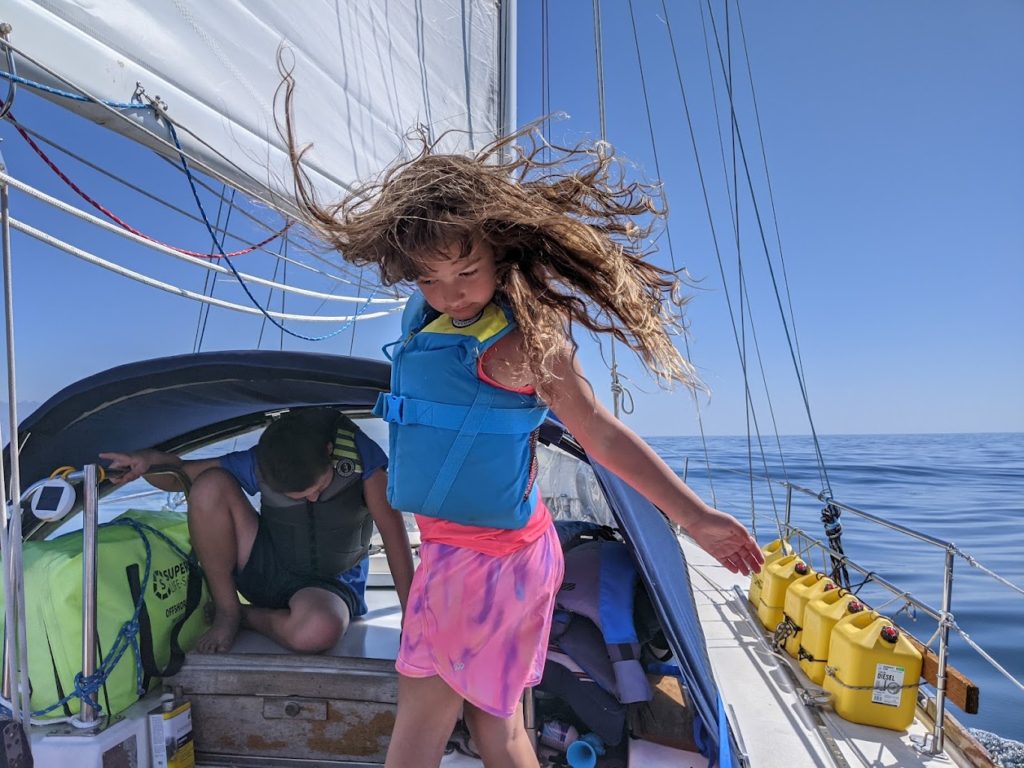
It was a difficult passage for us, rounding Cape Mendocino to arrive in Half Moon Bay. There were times that I felt extremely guilty for subjecting our children to those uncomfortable conditions. After all, there was a reason that we initially intended not to bring the kids back aboard the boat until after we’d gotten past Mendocino. But a sailor’s life is guided by the weather, and we just didn’t have a choice.
All in all, the kids rolled with the punches, and we all felt a great sense of accomplishment when we pulled into the harbor in Half Moon Bay. And the quaint coastal town did not disappoint.
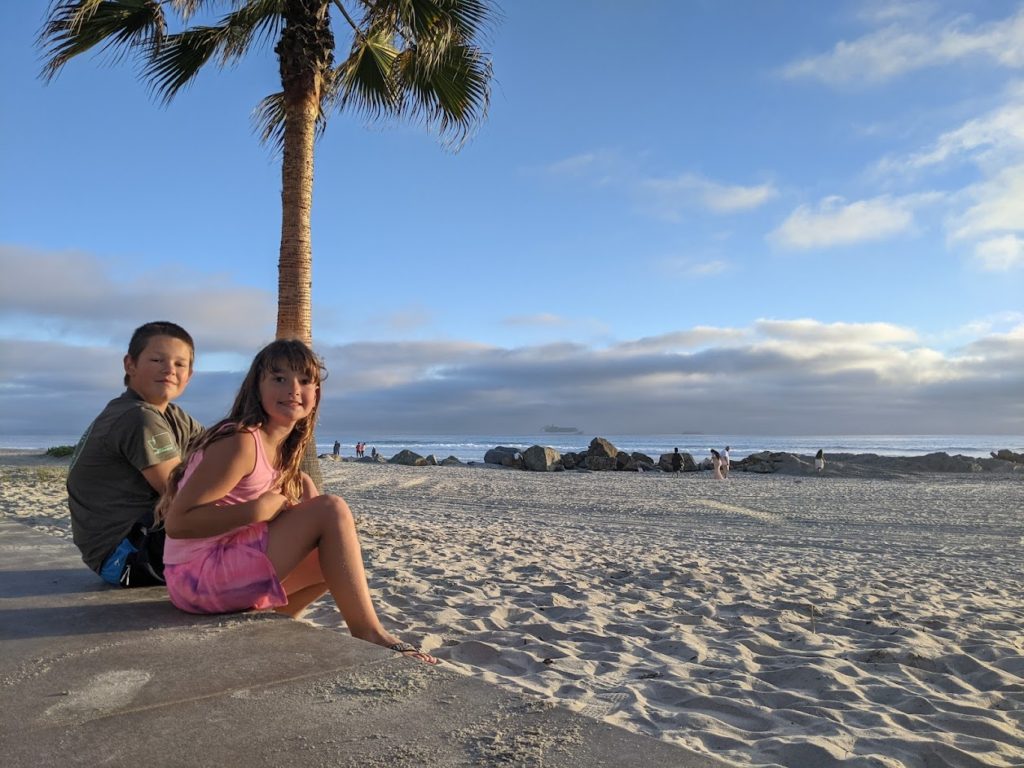
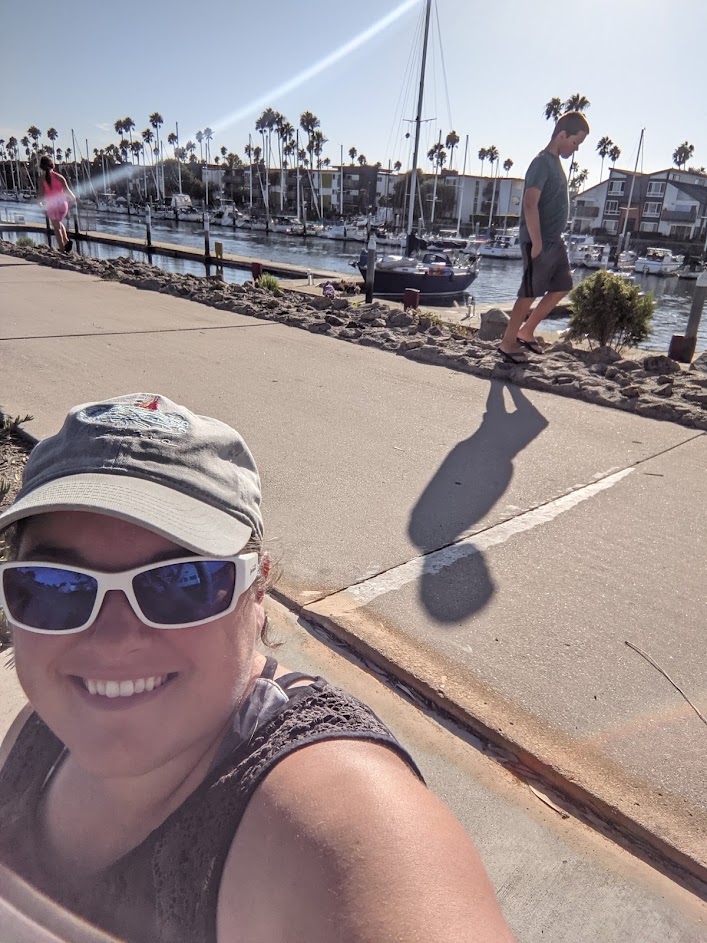
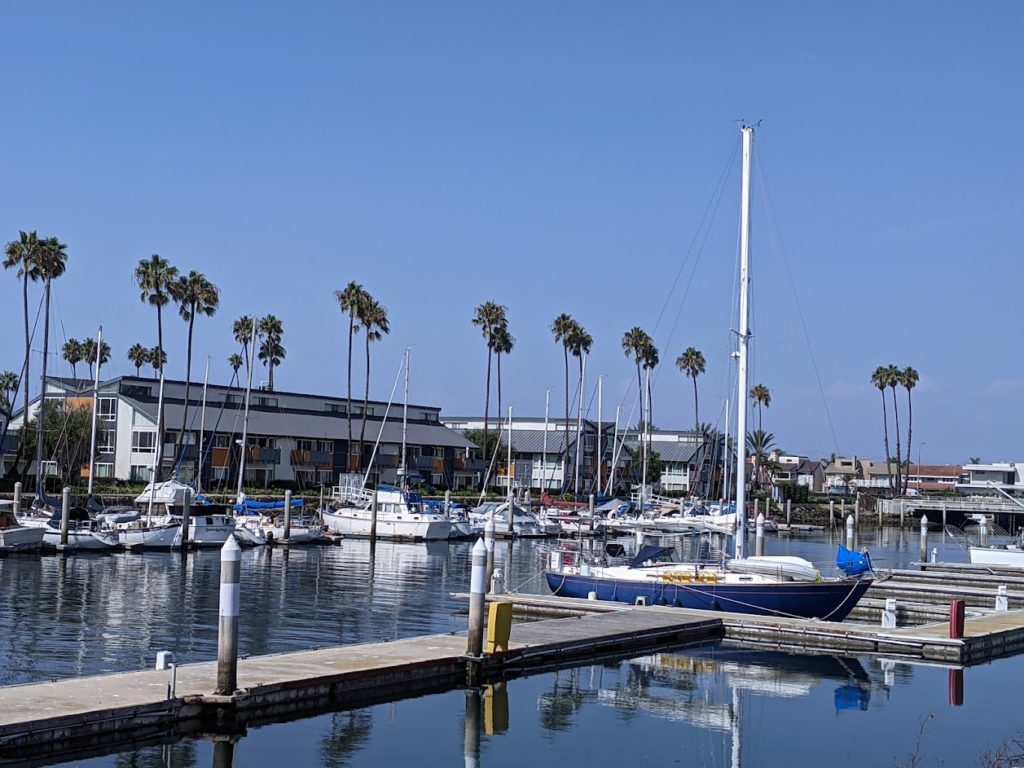
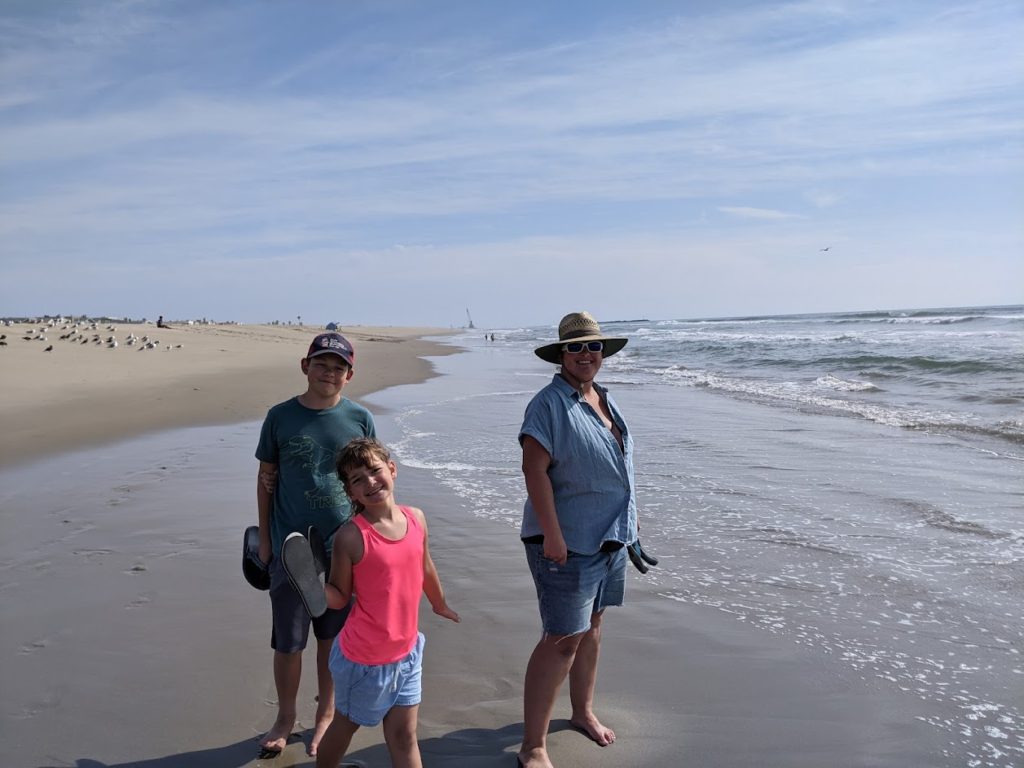
As we walked along the beach, we noticed a marked change in the environment. The plants were no longer the familiar evergreens and ferns of the Pacific Northwest, but instead had turned to palms and succulents. Bald eagles had been replaced by large pelicans. And the beaches were no longer the rocky pebbles of the Northwest, but fine soft sand. It was clear that we had really reached California.
So, we celebrated our accomplishment while simultaneously licking our wounds. The weather windows eased a bit and opened up more frequently but would continue the trend we’d seen down the coast. Often times being too much wind, or nothing.
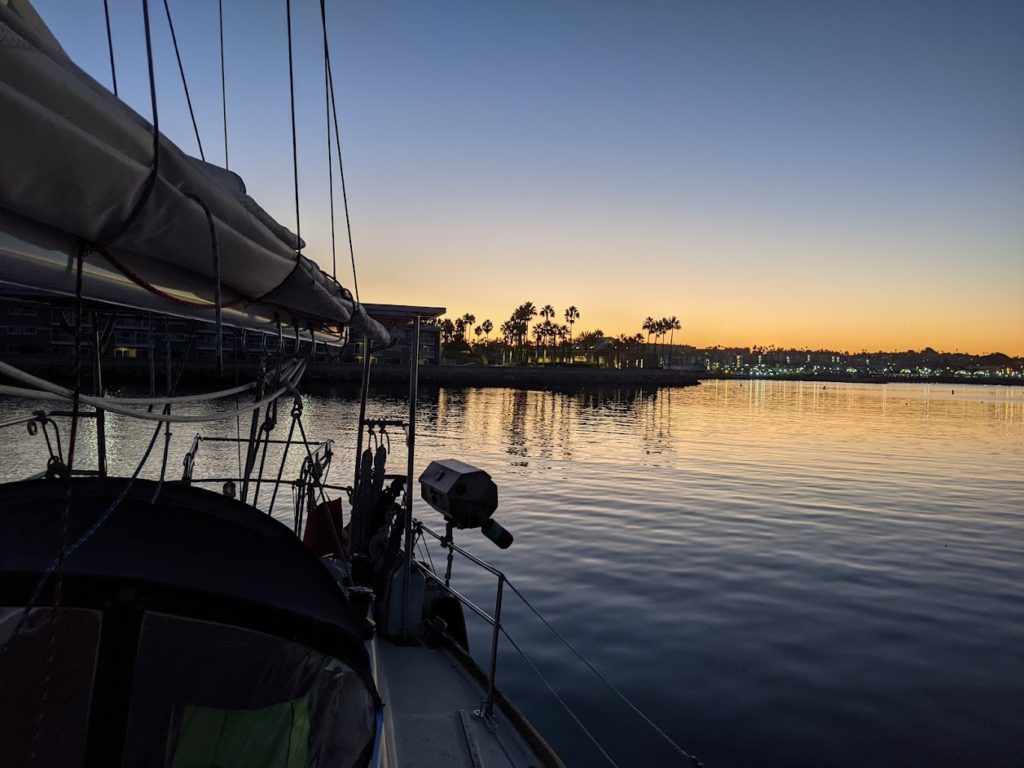
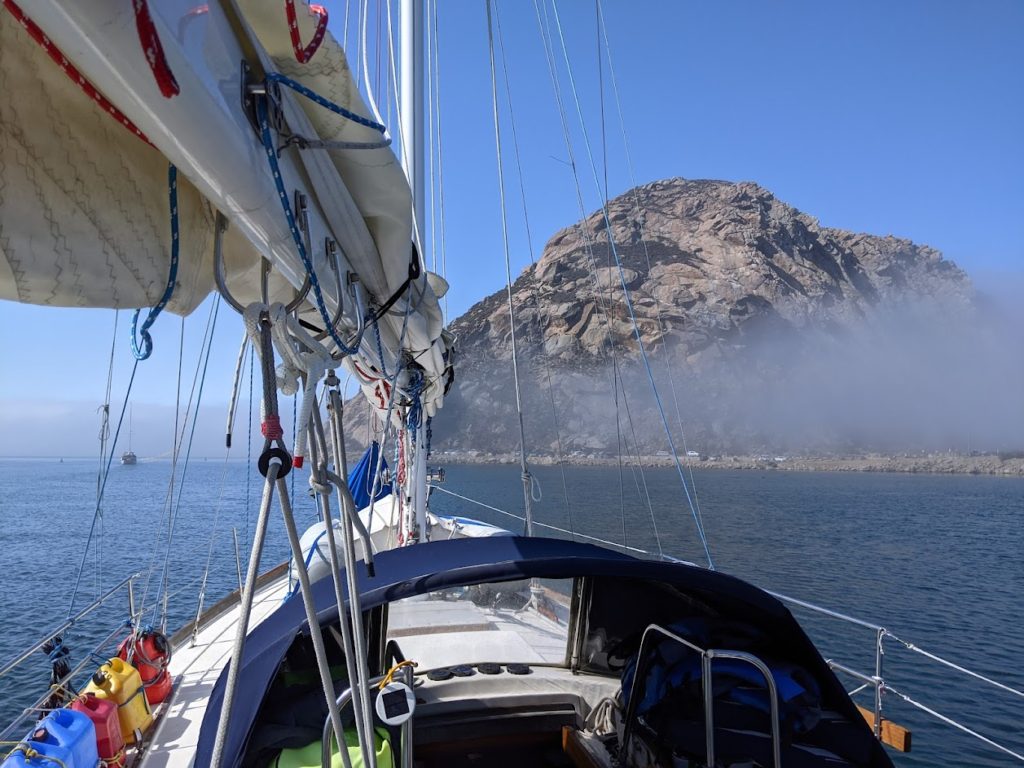
For the next six weeks, we hopped down the California coastline: Half Moon Bay to Morro Bay, Morro Bay to Oxnard, Oxnard to Redondo Beach and then to Dana Point. Each passage getting us closer and closer to our goal.
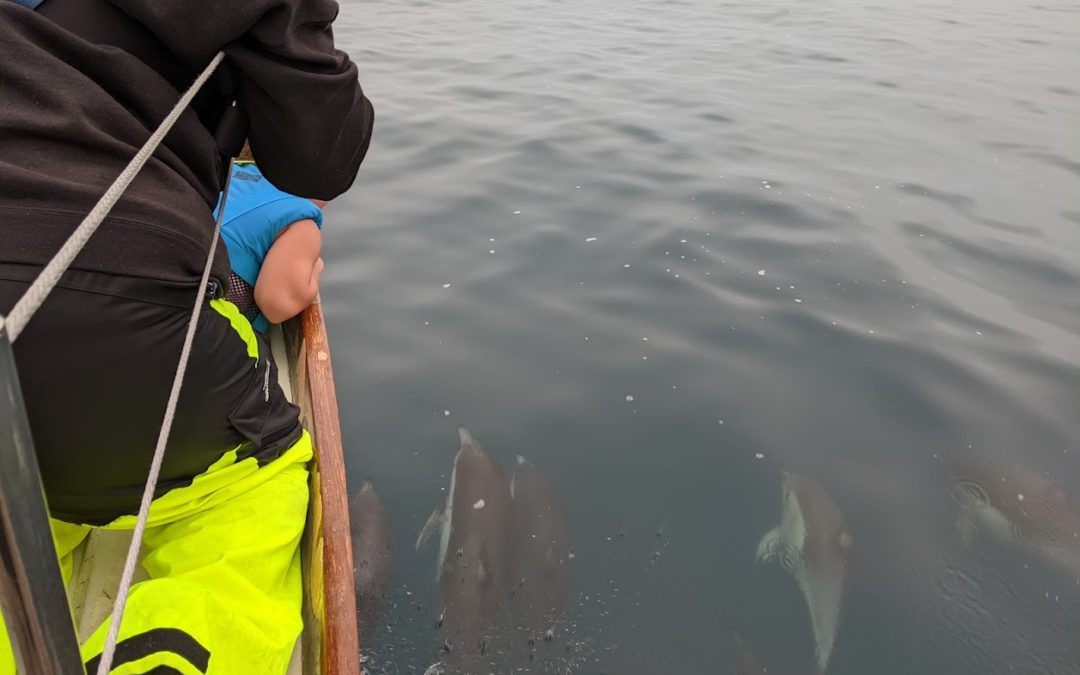
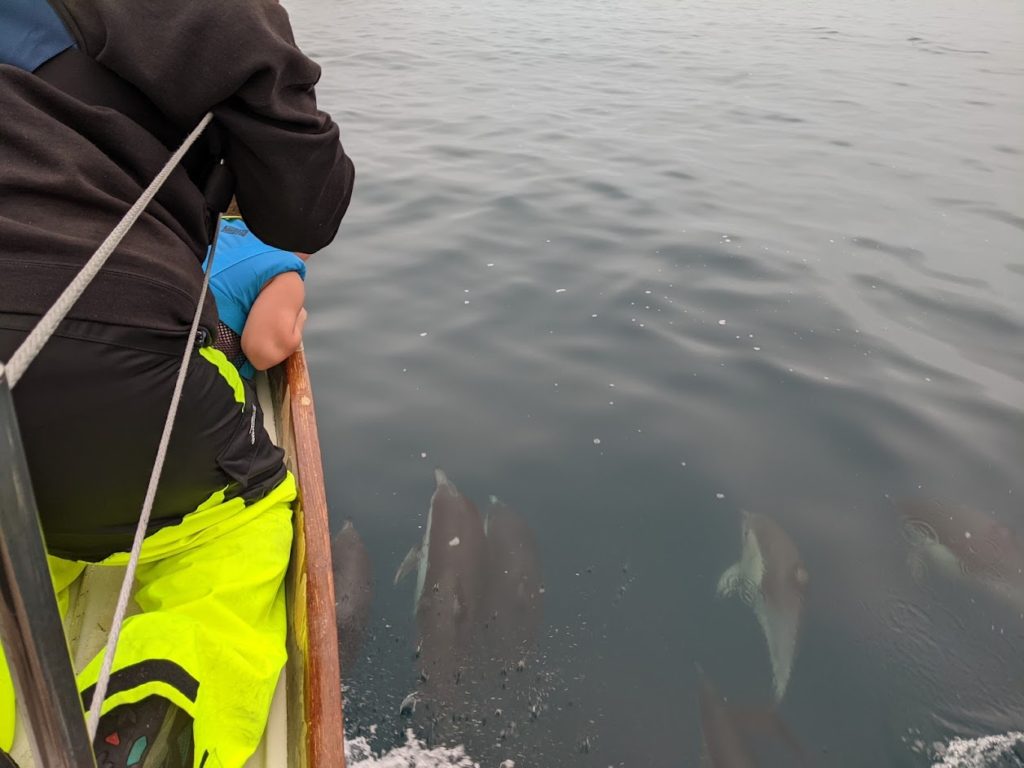
As we moved south, we saw fewer whales but many more dolphins. On our trip to Morro Bay, we experienced a dreamy 15 minutes with dozens of dolphins playing in the bow wave at the front of our boat. Our family sprawled on the deck above them laughing and calling out greetings. There were even a few happy tears as the sheer joy sank in. Another highlight was the night passage to Oxnard, where a troop of dolphins escorted us through the entire night of darkness, their lithe bodies glowing in bright bioluminescence. It seemed truly magical.
We also got word of the oil spill off Orange County and listened routinely to the reports of harbors and beaches closing, wondering how it would impact our journey and mourning the impacts to the environment. Thankfully, the spill response was swift and effective. We only ever saw an oily sheen on the water once, and it was in an area where we were warned to expect it due to natural seepage from the ocean floor itself.
In mid-October, we reached San Diego. Our arrival marked a big milestone in our journey. Not only would this be our final port in the United States before crossing south into Mexico, but this was also where we had purchased our sailboat five years ago before trucking her up to Portland to move aboard.
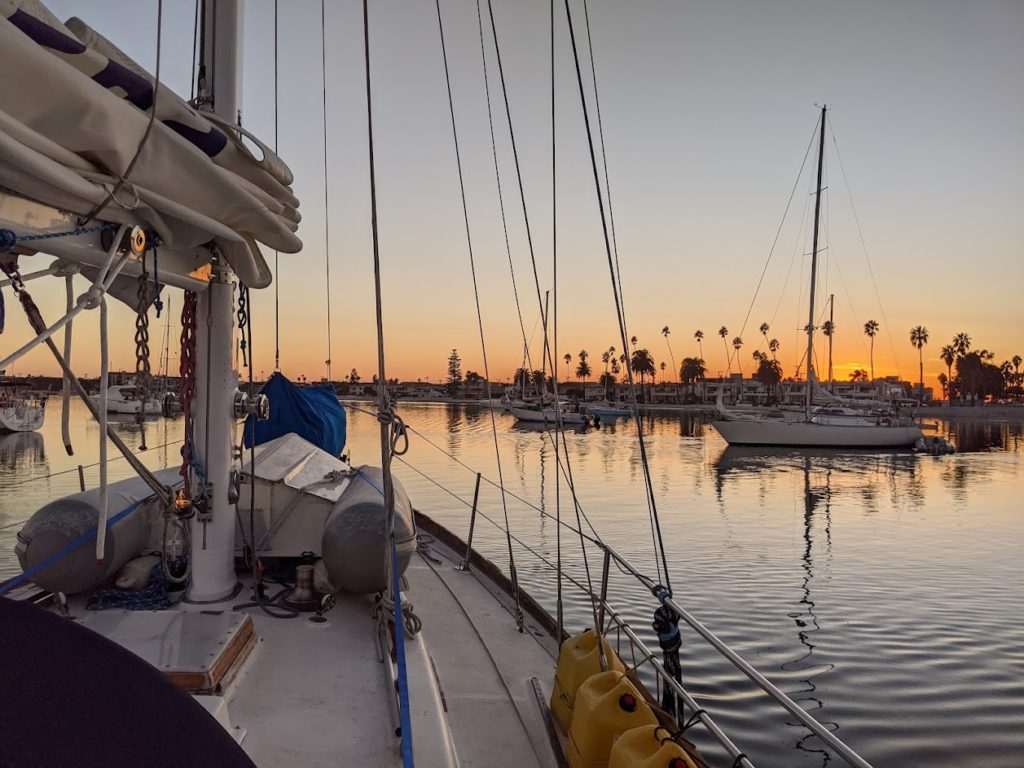
It was really cool to walk past the boatyard where Mosaic was pulled from the water and placed on the trailer five years ago, knowing that she was back in those same warm waters, anchored safely out in the bay after an adventurous trip down the entire US west coast with us.
We spent a couple of weeks in San Diego making final preparations and enjoying our community of sailing friends. Hundreds of sailboats were congregating in the waters of San Diego, preparing also to go south. In early November, we would leave the United States bound for Ensenada and the remote Baja California coast. Our whole world was about to change.
Rachel Messerschmidt and her family are Clark County natives living and cruising full time aboard their 40-foot sailboat, Mosaic. Currently traveling from the Pacific Northwest, down the west coast of the US, and onward toward Mexico, Rachel blogs about her life and journey at www.mosaicvoyage.com. She shares her family’s adventures in a monthly column in Vancouver Family Magazine.